
Why does my scented candle still lack fragrance even though I added fragrance oil?
Many customers who make scented candles have similar confusions: the fragrance oil ratio seems sufficient, and the cold scent is fine, but once lit, the fragrance doesn't come out, or can only be smelled in a very small area, completely failing to achieve the desired diffusion effect. Even more frustrating is that with the same formula, using a different batch of raw materials results in completely different fragrance performance.
From practical experience, insufficient fragrance diffusion is not necessarily a problem with the fragrance oil, nor is it necessarily due to adding too little fragrance oil. In many cases, the core factor that is often overlooked is the compatibility between the paraffin wax and the fragrance oil. If this step is wrong from the beginning, adjusting the ratio or changing the wick will have very limited effect. When Junda Wax supplies scented candle customers in different countries and regions, this type of problem is almost the most frequently mentioned.
The essence of fragrance diffusion is the release process.
To understand why paraffin wax affects fragrance diffusion, we must first understand how the fragrance is released. The fragrance diffusion of scented candles is not essentially the fragrance oil itself volatilizing, but rather being gradually carried into the air as the wax body heats, melts, and evaporates. Whether this process is smooth depends largely on whether the state of the wax is stable when heated.
If the paraffin wax has an uneven melting point distribution and contains many impurities, the melt pool state is prone to fluctuating in depth, and the release rhythm of the fragrance oil in the melt pool will be disrupted. The result is that the fragrance is inconsistent, and the diffusion range is limited. Fully refined paraffin wax, due to its high purity and more uniform carbon chain structure, forms a more stable melt pool when heated, which lays the foundation for the continuous release of fragrance. It is precisely because of this that Junda Wax's fully refined paraffin wax is widely used in export-oriented scented candle projects.
Why do some candles have a very fast fragrance release?
Another common manifestation of insufficient fragrance diffusion is that the fragrance is fine when first lit, but becomes significantly weaker in the middle and later stages of burning. This situation is very common in candles using incompatible paraffin wax. The reason is often that the fragrance oil is released too quickly in the early stages, but cannot keep up in the later stages. When the paraffin wax lacks melting stability, the melt pool temperature is too high in the early stages, causing the fragrance oil to volatilize too quickly, resulting in a depletion of fragrance in the later stages. Fully refined paraffin wax, due to its flatter heating curve and more even fragrance release rate, can significantly improve the problem of strong initial scent, weak later scent.
This is why many export-oriented scented candle brands require the use of fully refined paraffin wax during the sampling stage. Junda Wax, through its long-term export collaborations, has also accumulated a large amount of practical feedback data on fragrance persistence, helping customers reduce trial-and-error costs.
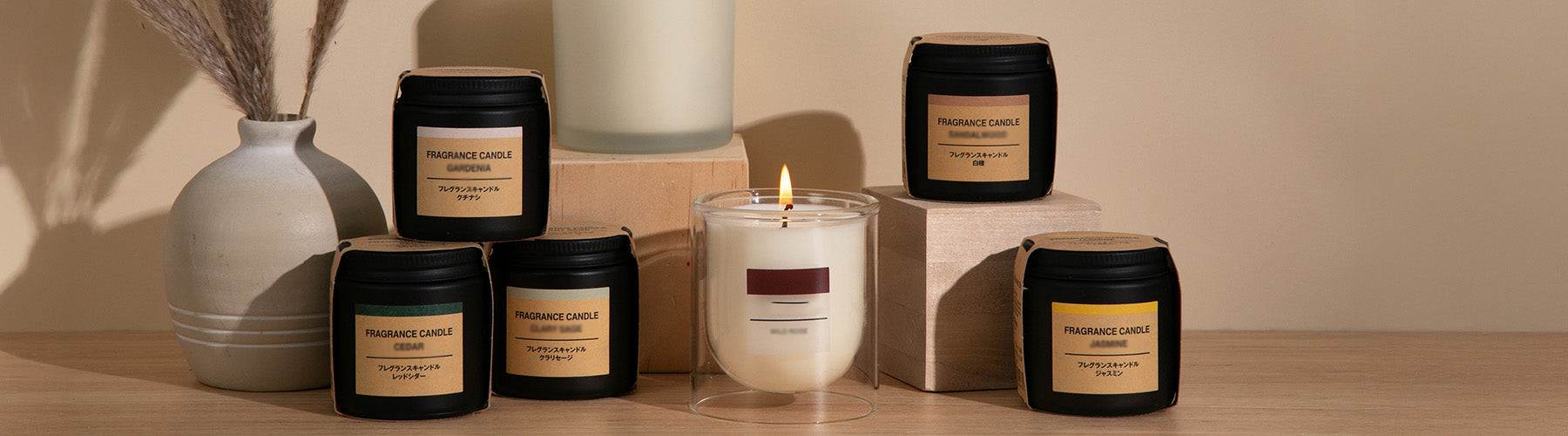
Different markets have different requirements for fragrance diffusion.
In the export market, there is no single standard for fragrance diffusion. European and American markets emphasize spatial diffusion and persistence, the Middle Eastern market prefers strong, impactful fragrances, while some Asian markets focus on a soft, non-irritating experience. Junda Wax's products are exported to multiple countries and regions, and it is based on the real needs of these different markets that it has developed relatively mature paraffin wax and scented candle material solutions. By adjusting the paraffin wax refining grade, melting point range, and supporting materials, the fragrance diffusion effect can be optimized more effectively.
Shifting from simply adding fragrance to a system-matching approach
Many candle factories, when encountering insufficient fragrance diffusion, first react by increasing the fragrance proportion. However, this method often increases costs without guaranteeing consistent results, and may even lead to new problems such as smoking and carbon buildup.
The truly effective approach is to consider the system as a whole, ensuring that the paraffin wax, fragrance, wick, dye, and manufacturing process form a stable combination. Fully refined paraffin wax acts as a fundamental stabilizer in this system. Junda Wax's emphasis on a one-stop supply model is essentially to help customers integrate these variables, rather than solving a single problem in isolation.
Returning to the initial problem, insufficient fragrance diffusion is likely not due to a poor fragrance, but rather an incompatible paraffin wax. The paraffin wax determines whether the fragrance can be stably encapsulated, whether it can be released evenly, and whether the scent can last from the first hour to the last.
By choosing the appropriate fully refined paraffin wax, and combining it with matching wicks, dyes, and production processes, the fragrance diffusion problem can often be fundamentally improved. For customers who want to enter the export market, develop branded products, or create high-repeat-purchase scented candles, this is a fundamental aspect that must be taken seriously. Junda Wax not only supplies fully refined paraffin wax, but also aims to be a one-stop service provider for candle manufacturing, offering everything from raw materials such as paraffin wax, wicks, and dyes, to candle production machinery, to facilitate our customers' candle manufacturing process. Please contact us via email for expert advice on selecting candle raw materials from our professional factory.
