
Why are more and more customers paying attention to high-temperature storage?
With the increasing global logistics and transportation times, and the growing demand in markets such as the Middle East, Latin America, Southeast Asia, and Africa, high-temperature environments are becoming increasingly common for paraffin wax products during storage and transportation. Especially in summer, warehouse temperatures can often reach above 40°C, and the internal temperature of shipping containers can even exceed 50°C. For candle manufacturers, if paraffin wax is exposed to high temperatures during storage, it can not only alter the product's appearance but also affect subsequent production processes and candle quality. Therefore, high-temperature storage has become an increasingly important aspect for international buyers.
Many customers believe that as long as the paraffin wax doesn't completely melt, it won't affect the quality. In reality, while prolonged high temperatures may not necessarily change the chemical composition of the paraffin wax, they will have a certain impact on the product's physical state, packaging integrity, and subsequent performance. As a long-term supplier of Candle Grade Paraffin Wax, Junda Wax has also conducted extensive practice and optimization on high-temperature storage in serving its global customers.
Prolonged high temperatures can easily affect the appearance of paraffin wax.
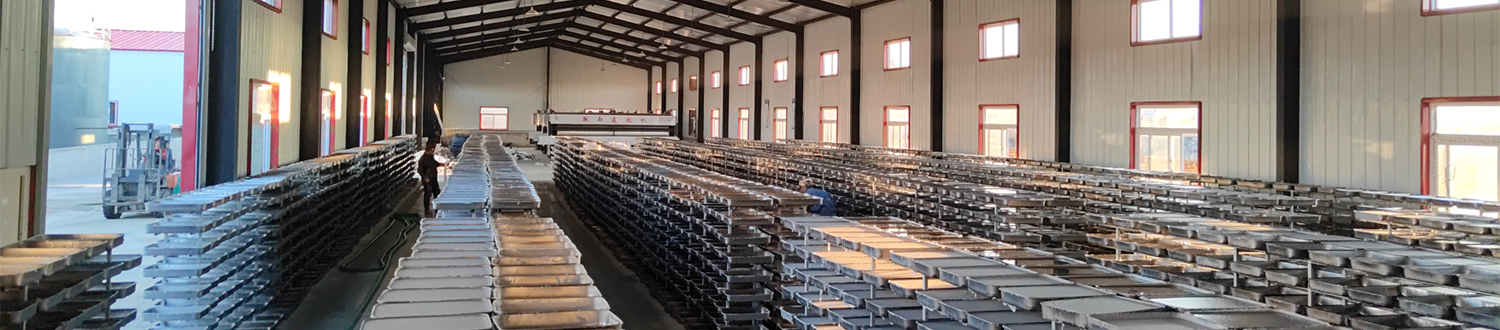
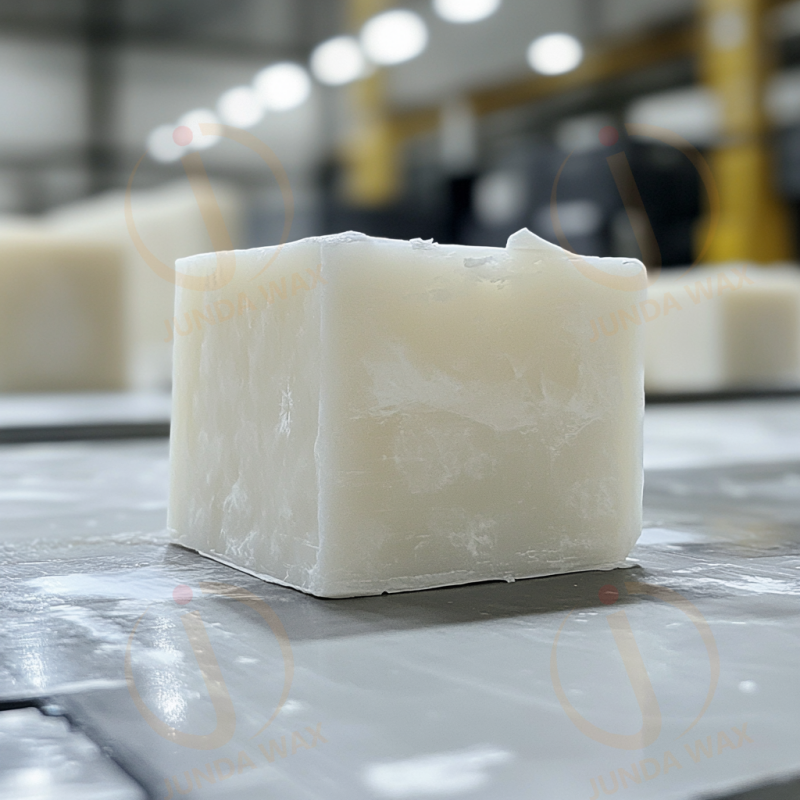
Paraffin wax is a thermoplastic material. When the ambient temperature continues to rise, although it does not reach its melting point, its hardness will gradually decrease. If the warehouse temperature remains above 40℃ for a long time, the paraffin wax blocks may deform slightly due to their own weight, especially when stacked high or under heavy pressure. This can easily lead to rounded edges, surface indentations, or even slight adhesion. These changes usually do not affect the chemical properties of the paraffin wax itself, but may affect the efficiency of subsequent automatic feeding and the product appearance. Therefore, proper control of storage temperature and stacking methods is crucial. Junda Wax fully considers export transportation and storage environments when designing product packaging, improving the stability of products under high-temperature conditions by optimizing the packaging structure.
Packaging is more susceptible to high temperatures than the paraffin wax itself.
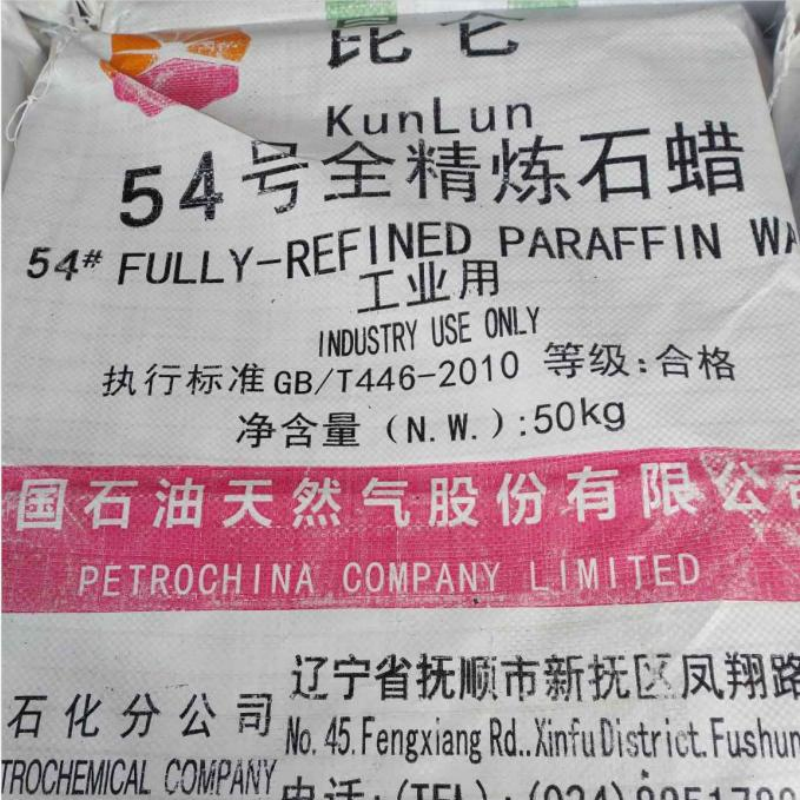
Many export cases show that during high-temperature transportation, it is often not the paraffin wax that is first affected, but the packaging material. For example, ordinary cardboard boxes easily absorb moisture and soften in high-humidity and high-temperature environments; plastic packaging may also deform slightly if its temperature resistance is insufficient; improper pallet stacking may cause the bottom products to be compressed. Therefore, for long-term export customers, packaging solutions are just as important as paraffin wax quality. Junda Wax continuously optimizes packaging methods based on different export markets and shipping routes, offering moisture-proof packaging, reinforced pallets, stretch film securing, and customized packaging solutions to help customers reduce transportation and storage risks and ensure products arrive at their factories in good condition.
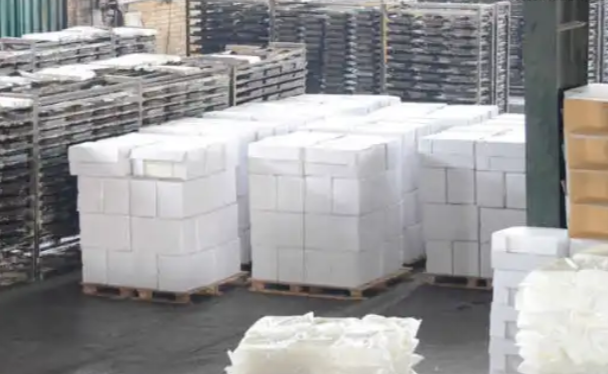
High temperatures do not change the melting point, but may affect production efficiency.
Many customers worry that high-temperature storage will cause the melting point of paraffin wax to drop. In fact, under normal storage conditions, high temperatures do not change the melting point, oil content, or chemical composition of fully refined paraffin wax; these indicators remain stable. However, if paraffin wax is exposed to high temperatures for an extended period, the product may need to readjust to the production environment after entering the factory. For example, when paraffin wax is at a high temperature, automatic cutting, conveying, or manual handling will be affected. Some manufacturers typically allow the product to stand at room temperature for a period before putting it into production to achieve more stable processing results. Therefore, the impact of high-temperature storage is more reflected in the physical state than the quality of the product itself.
Fully refined paraffin wax is more suitable for high-temperature transportation and storage.
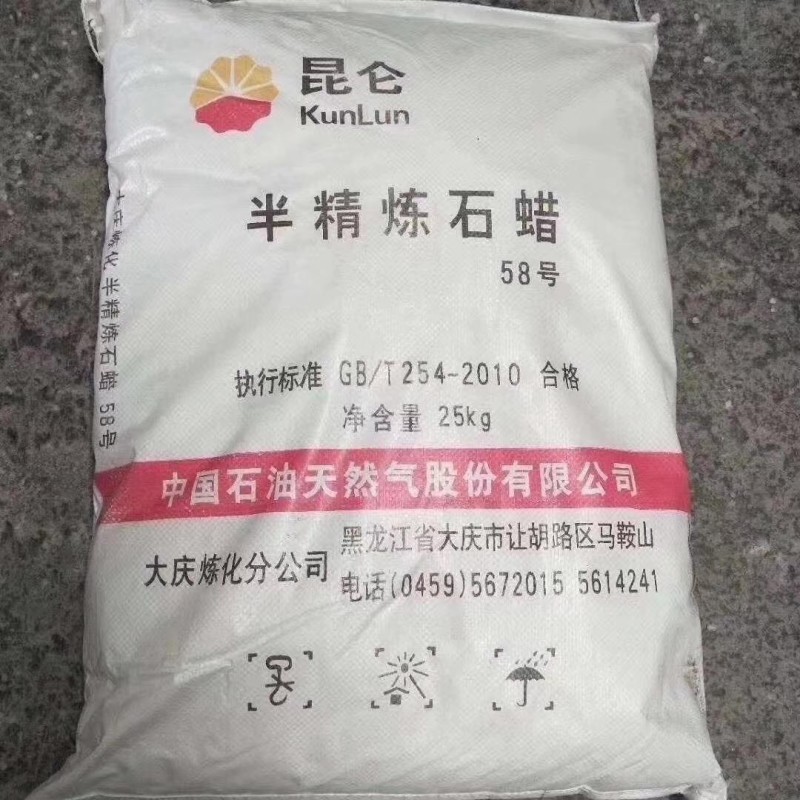
Different types of paraffin wax behave differently under high-temperature conditions. Fully refined paraffin wax, due to its high purity, low oil content, and stable crystal structure, exhibits superior heat resistance and dimensional stability. Under the same environmental conditions, fully refined paraffin wax is less prone to stickiness, oil seepage, and surface contamination compared to ordinary paraffin wax with higher oil content. For customers exporting to high-temperature regions such as the Middle East, Brazil, Mexico, Indonesia, and Thailand, choosing fully refined paraffin wax effectively reduces transportation risks while ensuring stable product performance after entering the production line. Junda Wax offers fully refined paraffin wax in various specifications, including 56℃, 58℃, 60℃, and 62℃, and can recommend the most suitable product solution based on the customer's country, transportation cycle, and product application.
High-temperature markets demand stable batch quality.
For long-term export customers, high-temperature environments are unavoidable, making batch stability of paraffin wax even more crucial. If the properties of different batches of paraffin wax fluctuate, these differences may be amplified after high-temperature transportation, impacting customer production. Therefore, large candle factories typically focus not only on product compliance but also on the supplier's ability to maintain consistent production capacity over the long term. Junda Wax has established a comprehensive quality management system, strictly controlling key indicators such as melting point, penetration, oil content, and color. Each batch of products is tested to ensure a stable long-term supply, helping customers reduce production adjustments caused by changes in raw materials.
We recommend that customers exporting to tropical regions prioritize fully refined paraffin wax specifications suitable for high-temperature environments and choose more appropriate packaging methods based on product characteristics. With years of export experience, our products are stably supplied to multiple markets in the Middle East, Latin America, Southeast Asia, Africa, and Europe, meeting application needs under different climatic conditions. In addition to high-quality Candle Grade Paraffin Wax, Junda Wax also provides one-stop procurement services for soy wax, wax thread, color powder, and candle production machinery, creating a more complete and stable supply system for customers.
As a professional kunlun paraffin wax company, Junda Wax consistently adheres to strict quality control standards and comprehensive export packaging management, committed to providing global customers with stable, safe, and high-quality paraffin products. If you are looking for paraffin solutions suitable for the high-temperature market, please contact us. We will provide you with professional advice and reliable one-stop supply services based on your target market and product needs.
