
Many domestic candle factories have a clear observation when they first enter the European market: European customers ask far more questions, and in much greater detail, than customers in other markets. They don't just ask about price and delivery time, but also inquire about material sources, test reports, burning safety, chemical compliance, and even packaging and labeling details.
It's not that European customers are difficult to deal with, but rather that the European market itself has a relatively mature and strictly enforced set of standards for everyday products like candles. Junda Wax, in its long-term service to European customers, has focused on these standards to provide high-quality paraffin wax and related products.
Why are European standards for candles so strict?
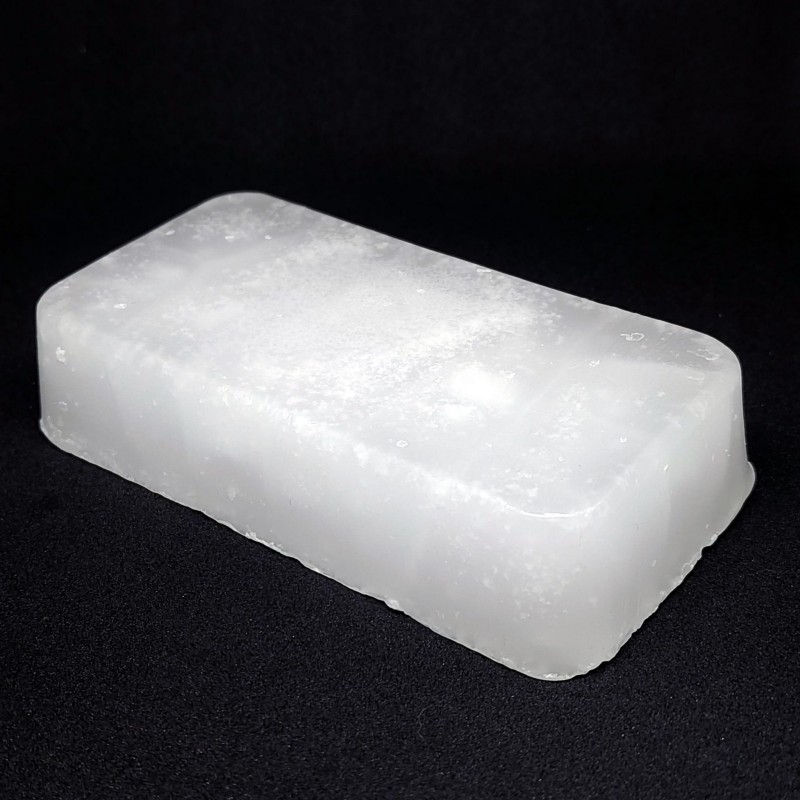
In Europe, candles are not just decorative items, but are widely used in homes, churches, celebrations, and aromatherapy, and are burned indoors for extended periods. fully refined white paraffin wax is dominant in the European market precisely because its advantages in purity, stability, and controllability make it easier to meet regulatory requirements. Junda Wax's fully refined white paraffin wax candles exported to Europe are almost always designed around low impurities, low odor, and clean burning, as these are the core concerns of both European regulations and consumers.
REACH compliance is the first hurdle to entering the European market.
When discussing European standards, REACH is unavoidable.
For candles, REACH is not just a formality, but an important chemical substance compliance requirement, focusing on whether they contain ingredients that pose potential risks to human health or the environment.
Fully refined white paraffin wax, due to its thorough de-oiling and low aromatic hydrocarbon content, is inherently more likely to pass REACH tests for SVHCs, heavy metals, and polycyclic aromatic hydrocarbons (PAHs). This is why European customers often explicitly require the use of fully refined paraffin wax, rather than mixed waxes with complex origins. Junda Wax, when exporting to Europe, cooperates with third-party organizations to complete the corresponding tests and proactively avoids potential risks during the formulation stage, giving customers greater peace of mind during customs clearance and market inspections.
PAHs, Smoke, and Odor
Many European customers don't directly request PAH testing, but they are very concerned about whether the candle emits a pungent odor, produces excessive smoke, and whether the indoor air is comfortable. These subjective requirements ultimately come back to the material itself. Fully refined white paraffin wax, due to its more regular molecular structure, is less likely to release complex byproducts during combustion, which is crucial for reducing smoke and odor. In its projects exporting to several European countries, Junda Wax has consistently provided stable supplies of fully refined paraffin wax, leading to better customer feedback at the end-use stage, rather than having to react to problems after they arise.

Appearance and Stability
In the European market, the appearance and stability of candles often directly affect whether they are returned.
Surface oil seepage, deformation, and uneven color, if they occur during transportation or shelf display, may be considered substandard quality.
The low oil content and stable crystallization characteristics of fully refined white paraffin wax make candles less prone to problems during high-temperature transportation and long-term storage. This is especially important for cross-seasonal exports. A significant portion of Junda Wax's European customers stock up on festive candles several months in advance, and the stability of the materials directly determines their inventory risk.
Labels and Information Transparency are also important to European customers.
Although labels and instructions are not entirely part of material standards, in the European market, they are often reviewed together with product safety. Clearly labeling usage instructions and providing burning precautions will affect whether a product is considered responsibly supplied.
This is why more and more customers want suppliers to not only provide paraffin wax but also understand the compliance logic of the entire candle product. When serving export customers, Junda Wax often participates in discussions about end-use scenarios from the raw material stage, helping customers reduce risks caused by incomplete information.
A clear trend is that European candle brands are increasingly unwilling to piece together their supply chains themselves. They prefer to cooperate with partners who can provide long-term stable supply and understand regulatory requirements.
This is why Junda Wax continuously strengthens its one-stop service. In addition to fully refined white paraffin wax itself, we can also provide wicks, dyes, and candle production equipment, helping customers maintain consistency in materials, processes, and equipment, reducing non-compliance risks from the source.
From practical experience, the difficulty in exporting to Europe is not in the complexity of the standards, but in whether these requirements are viewed as a system. When fully refined white paraffin wax, wicks, formulas, and production processes are designed around the European market from the beginning, compliance becomes much smoother. In addition to paraffin wax products, Junda Wax also provides wax wicks and dyes, facilitating integrated candle production. This has been proven through long-term exports to several European countries.
