
In candle production, many problems can be traced back to a single source – the paraffin wax itself. Lack of luster, smoking during burning, poor fragrance release, and surface frosting – these may seem like processing issues, but often the root cause is the wrong choice of paraffin wax purity. This is especially true for fully refined paraffin wax; while the names may sound similar, the actual differences in purity are significant. Junda Wax, in its long history of supplying customers in different countries and regions, has encountered many real-world cases where customers changed their paraffin wax, and their candles improved dramatically.
What constitutes fully refined paraffin wax?
Many new customers initially ask: Isn't Fully Refined white Paraffin Wax just whiter and cleaner? But in practical applications, the refinement of fully refined paraffin wax is not just about color. Truly high-purity fully refined paraffin wax means low impurity content, stable oil content, and a uniform molecular structure, resulting in consistent performance throughout the melting, cooling, and burning processes. This is why, even with fully refined paraffin wax, some candles have a porcelain-like surface, while others are prone to fogging and graying. When exporting to different markets, Junda Wax clearly differentiates between different purity levels of Fully Refined white Paraffin Wax based on the customer's application scenario, rather than using a single specification for all.
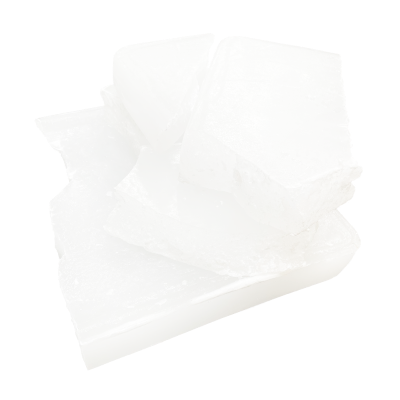
Visual Inspection
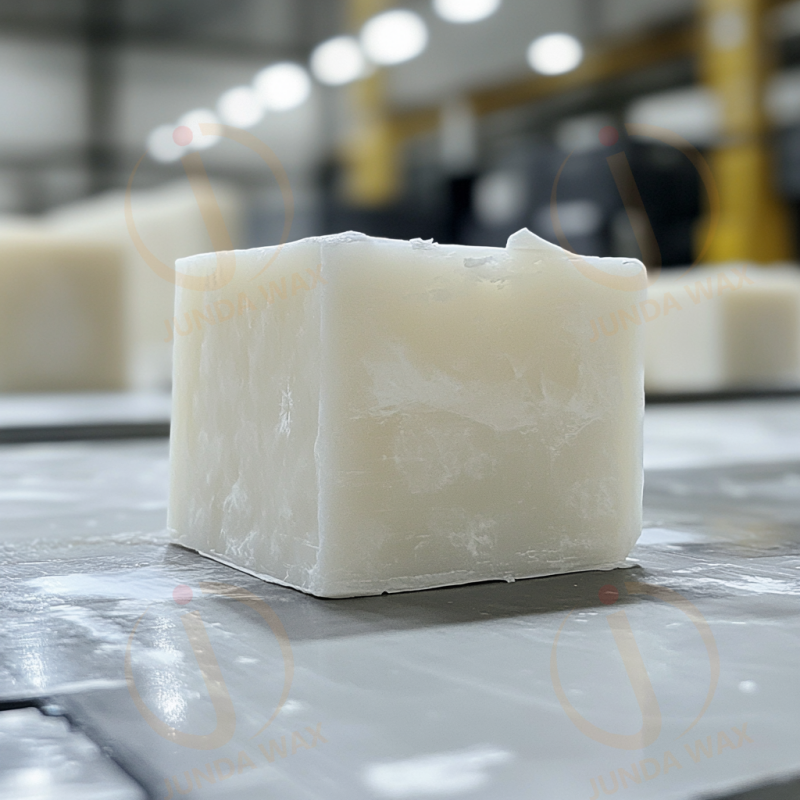
The first step in determining the purity of fully refined paraffin wax is visual inspection. High-purity fully refined paraffin wax is naturally white or off-white at room temperature, with good transparency, a fine texture, and no obvious impurities or oil stains. Low-purity paraffin wax often has a yellowish or grayish tint, and under light, it will appear less transparent. Junda Wax's customers often cut a small piece of paraffin wax to observe the cross-section during factory inspections – a very practical on-site assessment method.
Melting State
While appearance can be faked, the melting state is much harder to disguise. High-purity fully refined paraffin wax, when heated and melted, produces a clear liquid with minimal impurity sedimentation, a uniform oil film on the surface, and no significant floating particles. Conversely, paraffin wax with insufficient purity will easily become cloudy, separate into layers, or even emit an odor during the melting process. This difference is particularly evident during continuous candle production. When Junda Wax supplies paraffin wax to overseas customers, they always recommend conducting small-batch wax melting tests first, rather than relying solely on test reports, because the actual production conditions are more indicative than any parameters. [Image can be inserted here: Actual photo of paraffin wax melting state]
The surface after cooling directly determines the appearance of the candle.
For candles, the surface condition after cooling is the first impression. High-purity Fully Refined white Paraffin Wax cools to a flat, smooth surface, and is less prone to dents, ripples, or oil separation. This difference is especially noticeable in products with high appearance requirements, such as tea lights and pillar candles. Many of Junda Wax's customers have found that after switching to high-purity Fully Refined white Paraffin Wax, the rework rate of finished candles has significantly decreased, and the consistency of appearance is easier to control, which is especially important for export orders.
