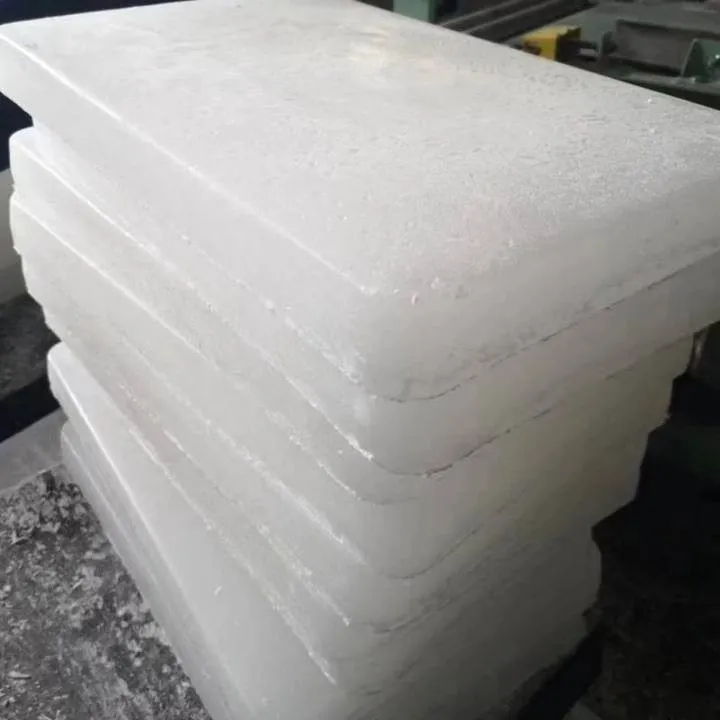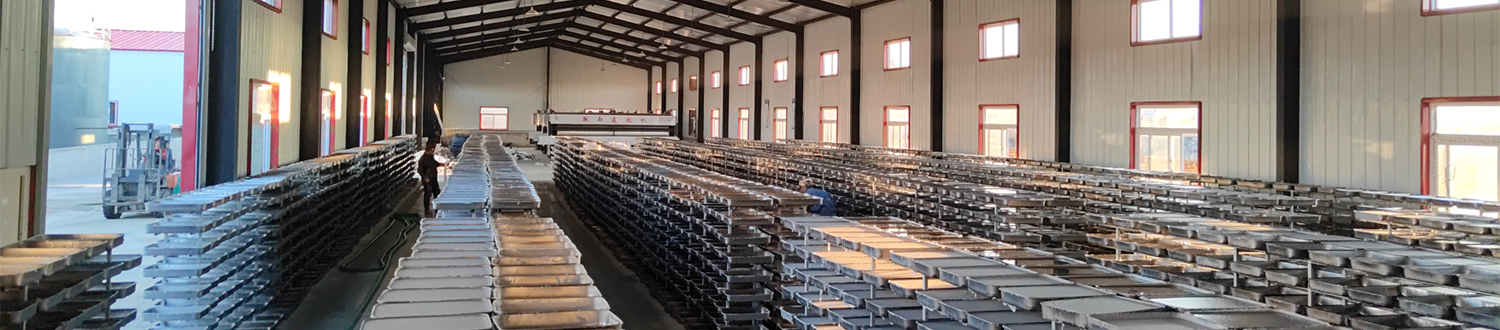
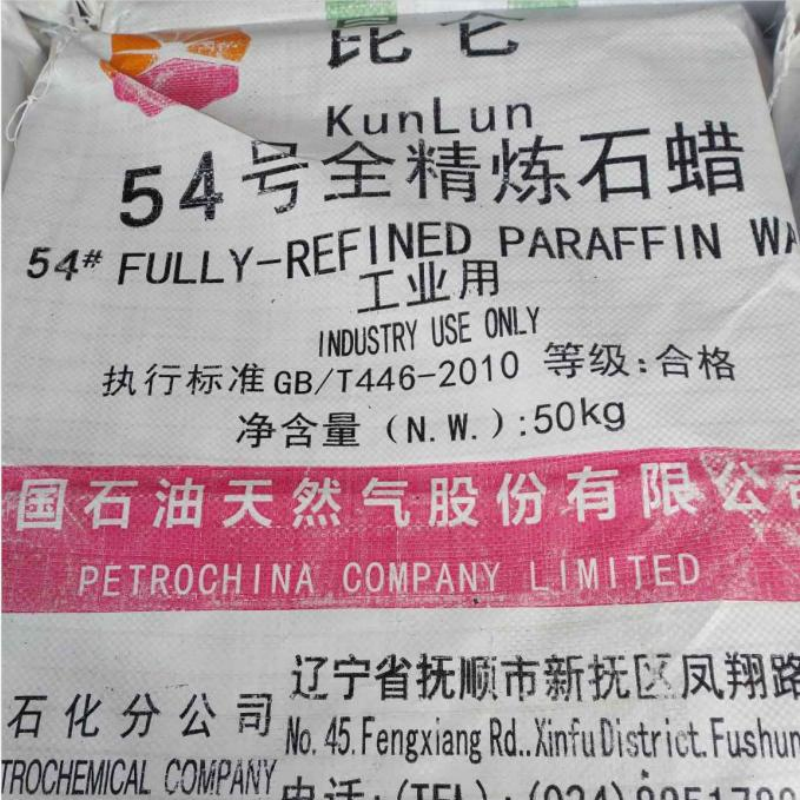
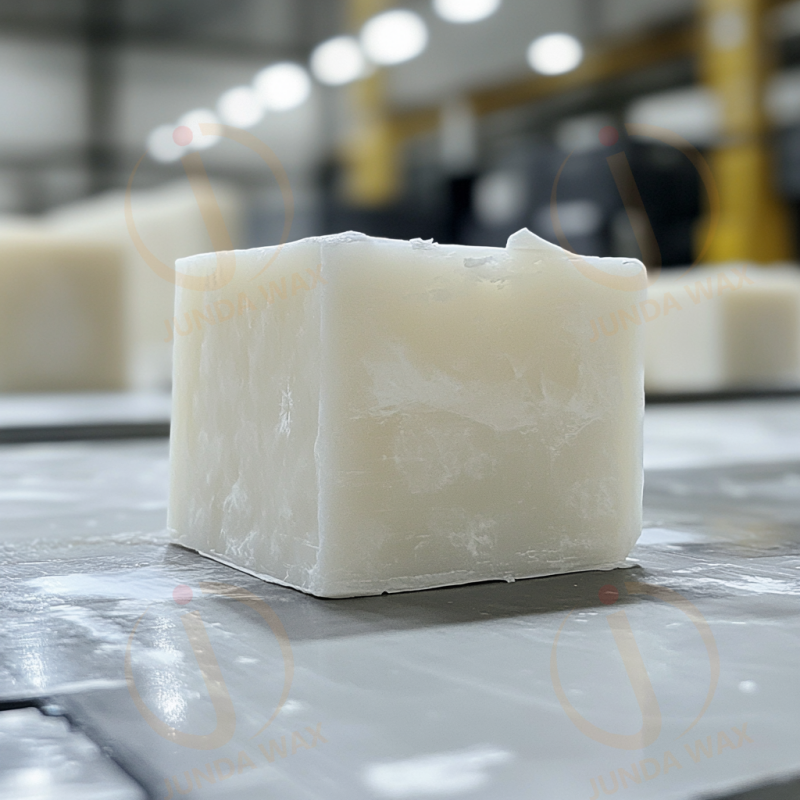
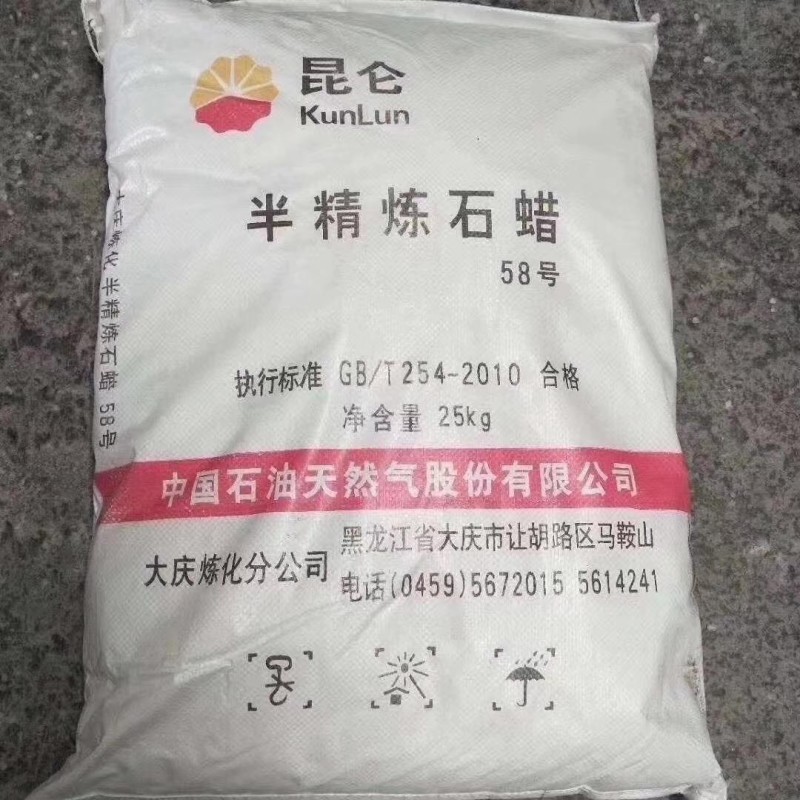
Fully Refined Paraffin Wax and ordinary paraffin wax are two fundamental yet distinct products. Understanding the fundamental differences in terms of purity, performance, application scenarios, and long-term value will enable buyers and manufacturers to more correctly align their needs and thus, optimize product quality and cost structure.
Core Differences: From Production Process to Quality Standards
1. Purity Grade
Fully Refined Paraffin Wax: The wax is subjected to several refining operations such as deep hydrogenation, decolorization, and deodorization. The oil level is strictly monitored to be less than 0.5%, barely any traces of impurities, pure white color, and no odor.
Ordinary Paraffin Wax (taking semi-refined paraffin wax as an example): Oil content is typically between 0.5% and 2.0%, with a pale yellow to milky white color, and may have a slight raw material odor.
2. Physical Stability
Fully Refined Paraffin Wax: Precise melting point range (commonly 52℃–62℃), low shrinkage during melting and solidification, uniform shape, and less prone to cracking, denting, or deformation.
Regular Paraffin Wax:Has a relatively high shrinkage rate, and may experience surface defects or difficulty in demolding under rapid cooling or large temperature differences.
II. Application Scenarios Comparison:** How to Choose the Right Product?
| Application Areas | Fully Refined Paraffin Wax | Ordinary Paraffin |
| Candle making | High-end scented candles, wedding candles, branded gift candles, white or light-colored candles | Everyday household candles, holiday decorative candles, bulk candles for hotels, dark candles |
| Personal care/cosmetics | Products that come into direct contact with the skin, such as lipsticks, skin creams, and pharmaceutical-grade materials. | It is generally not recommended for use in highly sensitive situations where direct skin contact is required. |
| Food and Packaging | Food packaging coatings, chewing gum base, and materials that come into indirect contact with food. | Industrial waterproof packaging, general commodity packaging impregnation |
| Precision Industry | Precision casting wax molds, electronic component insulation, and high-end textile processing. | Ordinary anti-rust coatings, low-cost waterproof materials, match products |
III. Comprehensive Evaluation:
1. Cost and Value Analysis
Regular Paraffin Wax:
Lower price (typically 10%–30% lower than fully refined paraffin wax), suitable for cost-sensitive, high-volume production markets in the low-to-mid-range segment.
Fully Refined Paraffin Wax:
Higher unit price, but higher yield (typically >98%), lower return risk, and can support brand premium; its long-term overall cost may be more advantageous.
2. Supply Chain and Compliance Requirements
Fully Refined Paraffin Wax:
Requires complete quality documentation (such as COA, MSDS, GMP certification, etc.) and must meet the chemical quality standards for export to high-end markets such as the EU and North America.
Regular Paraffin Wax:
More flexible supply chain, but relatively less stringent requirements for impurity content and batch consistency control.
3. Differences in Combustion Performance and Safety
Fully Refined Paraffin Wax: Burns without smoke, odor, or black smoke residue, meeting the safety and environmental protection expectations of high-end consumers.
Ordinary Paraffin Wax: May produce slight smoke or odor in cases of insufficient ventilation or improper formulation.