
Why do different paraffin waxes, all labeled as fully refined, perform so differently?
Many candle manufacturers experience this: the specifications seem similar, the names are the same—all labeled as fully refined paraffin wax—but once used in production, the differences become obvious. Some waxes mold smoothly and have a fine surface, while others are softer and easily deformed; some burn steadily with a clean flame, while others produce excessive smoke, have a collapsing wick, and even have poor fragrance diffusion. This isn't due to operator error, but rather real quality differences inherent in "fully refined paraffin wax."
Fully refined ≠ completely identical; the depth of refining is crucial.
From an industry perspective, fully refined paraffin wax is just a broad category name, indicating that impurities and odors have been largely removed, but it doesn't mean all products are identical in detail. Different factories invest differently in refining depth control, deoiling degree, and odor treatment. Some achieve "just adequate" quality, while others prioritize additional stability control. These differences may not be obvious in test reports, but they directly affect molding results and burning performance in actual production. In its long-term export projects, Junda Wax focuses on these "invisible but noticeable" stability indicators.
Small differences in oil content can become big problems.
Oil content is a point many customers overlook, but it has a very direct impact on candles. Fully refined paraffin wax with slightly higher oil content will feel softer, and pillar candles and tea lights are more prone to deformation in high-temperature environments. Colored candles and scented candles are also more likely to show oil seepage and oil stains. Conversely, paraffin wax with stable oil content control molds more cleanly, demolds smoothly, and burns with a more concentrated flame. Junda Wax recommends the most suitable grade for different candle types during paraffin wax production and selection, rather than using one type of paraffin wax for all products.
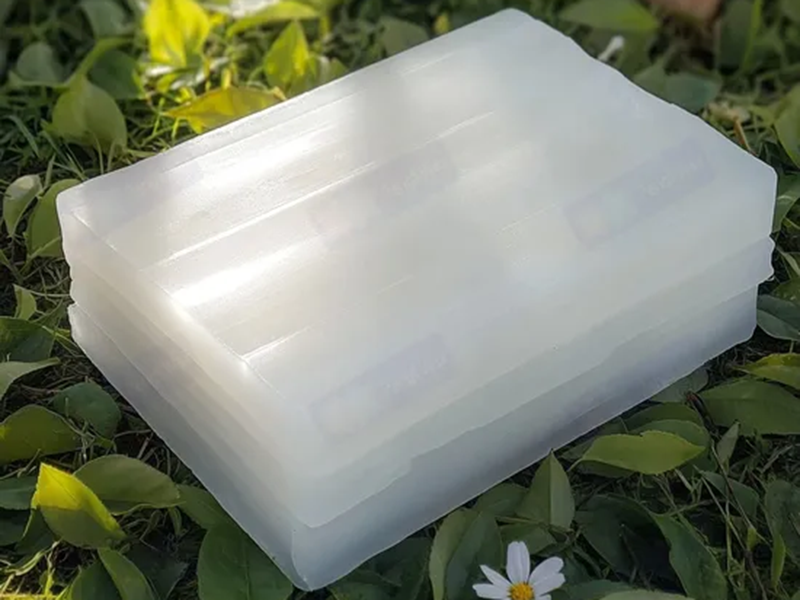
Different raw material sources result in different crystal structures.
Even with the same melting point, different fully refined paraffin waxes will have significant differences in their crystal structure after cooling. Some waxes have fine crystals and a smooth surface after cooling; others are more prone to developing textures, shrinkage, or depressions. This is related to the raw material system, refining process, and batch switching frequency. For long-term export candle products, batch stability is often more important than the price of a single batch, a point many customers only truly realize after working together for a period of time. The paraffin wax itself might not be the problem; it could be an issue with the combination of materials.
Another common situation is that the paraffin wax itself is of good quality, but its compatibility with the wick, fragrance, and colorants is poor, leading to uneven burning, insufficient fragrance diffusion, or unstable color. Ultimately, all these problems are attributed to "this batch of paraffin wax is no good." In reality, candle making is a complex process, and the compatibility between materials is often more crucial than the quality of a single raw material. Junda Wax not only provides fully refined paraffin wax but also supplies wicks, dyes, fragrances, and candle production equipment, helping customers reduce trial and error in actual production.
Choosing the right supplier is more important than simply switching paraffin wax.
Ultimately, the reason why you encounter different results with seemingly identical fully refined paraffin wax is not a coincidence, but a long-standing reality in the industry. The real solution is not just to switch suppliers, but to find a supplier who understands candle applications, prioritizes batch consistency, and can provide advice from a production perspective. For many years, Junda Wax has exported paraffin wax and related candle materials to numerous countries and regions, and it is through this holistic approach that we help our customers make their candles more stable and controllable.
Whether fully refined paraffin wax is effective ultimately comes down to its molding, burning, and stability characteristics. When you find that different paraffin waxes perform very differently, it's often not your imagination; there are indeed differences in the materials themselves. Choosing the right paraffin wax grade, the right combination of materials, and the right long-term supplier is key to solving the problem. If you need to choose fully refined paraffin wax, please contact Junda Wax for professional product information.
