
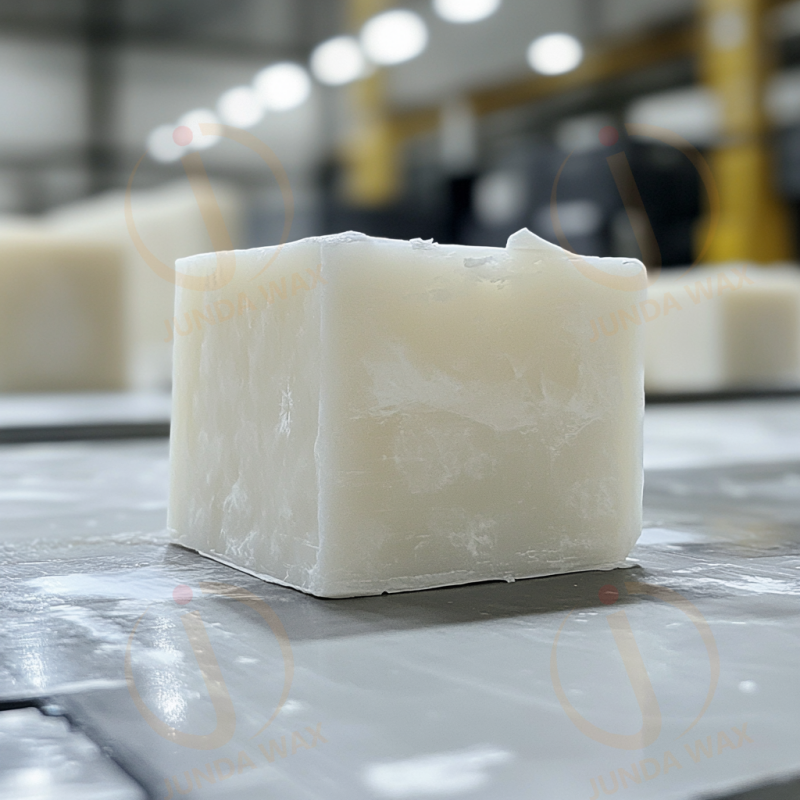
The condition of cooled paraffin wax can be more direct than a test report. For those who have long been involved in candle production, a glance at the cooled wax surface can usually indicate whether a batch of paraffin wax is suitable for their products. From the perspective of selecting paraffin wax, the cooling effect is a very important reference indicator.
Surface Smoothness
When paraffin wax is completely melted and naturally cooled, if the surface is smooth and fine, without obvious ripples or a grainy texture, it usually indicates a relatively uniform crystal structure and stable refining process control. Conversely, if the surface shows rough particles, streaks, or uneven shrinkage marks after cooling, it is likely that the refining depth is insufficient or the raw material system fluctuates greatly. In actual production, this type of paraffin wax is more likely to have problems such as pits, shrinkage pits, or a whitening surface. Junda Wax strictly controls the refining process and raw material stability during production to ensure a more uniform wax structure after cooling.
Shrinkage and Depression
Paraffin wax will naturally shrink during cooling, but if the center is significantly depressed and the edges are severely collapsed, it usually indicates uneven internal crystallization. Such paraffin wax often requires secondary waxing when making columnar or container waxes, increasing production costs. Fully refined paraffin wax with stable crystallization shrinks more evenly, has controllable depressions, and higher molding efficiency. Junda Wax, a long-time supplier to export clients, adjusts the melting point and oil content combination for different candle types to reduce production problems caused by cooling shrinkage.
Is the surface oily?
If a slight oil film or abnormal gloss appears on the surface after cooling, the oil content is likely too high. Excessive oil content not only affects appearance but can also cause oil seepage or deformation during high-temperature transportation. This difference is amplified, especially when exported to high-temperature regions such as the Middle East, Africa, or Southeast Asia. Junda Wax controls the oil content range according to different market demands during paraffin wax screening and grading to ensure product stability during transportation and storage.
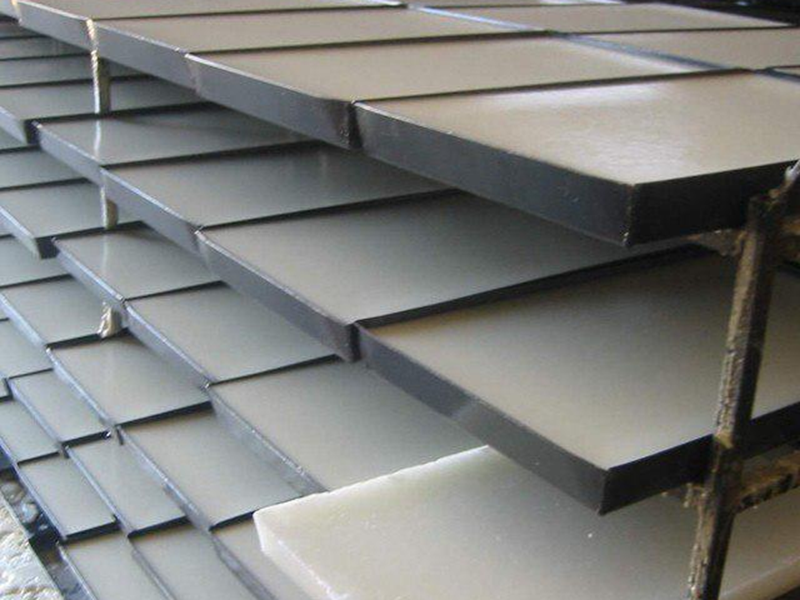
Is the surface white or hazy?
Some paraffin waxes exhibit a white or hazy appearance after cooling, often related to unstable internal microcrystalline structures. Such paraffin waxes may result in an uneven flame or an uneven wax pool during combustion. For clients producing high-end scented waxes or branded products, this issue directly impacts the final product's appearance. A stable refining system and continuous batch control are key to avoiding this problem. Junda Wax, relying on its mature production lines and strict quality control system, ensures consistency between different batches.
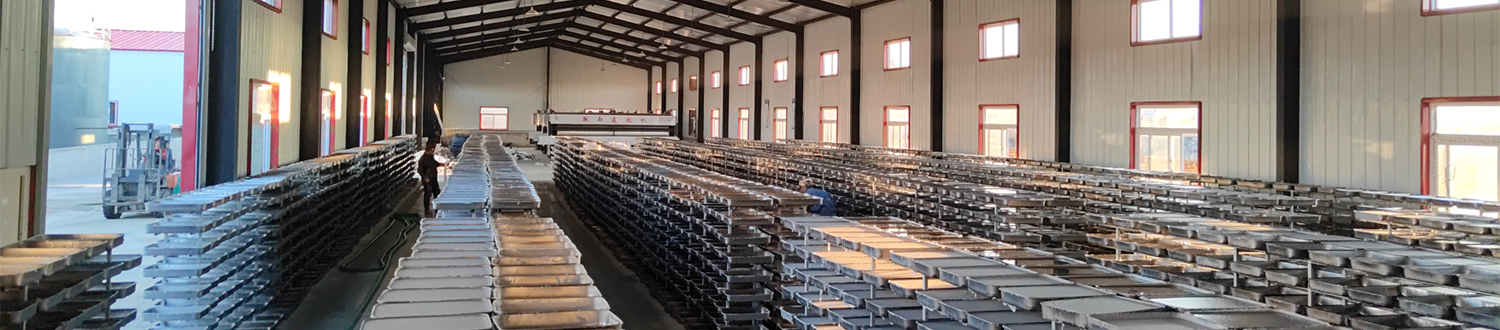
Many clients, when selecting paraffin wax, only focus on the melting point and oil content figures, neglecting the most intuitive aspect: its cooling performance. In fact, a simple melt-cooling test can provide a preliminary assessment of whether the paraffin wax is suitable for their product. Truly good fully refined paraffin wax not only meets the specifications but, more importantly, cools evenly, has a stable surface, and burns consistently. For many years, Junda Wax has exported fully refined paraffin wax and related products to numerous countries and regions. Leveraging stable raw material sources and large-scale production capabilities, it can consistently provide batch-to-batch products to meet diverse market demands.
The surface condition of cooled paraffin wax is an important window into its quality and stability. If you are testing new suppliers or optimizing existing formulas, consider starting by observing this detail. A stable surface often indicates fewer production problems and a higher finished product yield. Junda Wax not only offers a wide range of fully refined paraffin waxes, but also supplies wax production lines, dyes, and candle manufacturing equipment, helping you optimize your entire process from raw materials to production. If you require a more stable supply and a more suitable product solution, please feel free to contact us. We can provide tailored advice based on your product type.
